
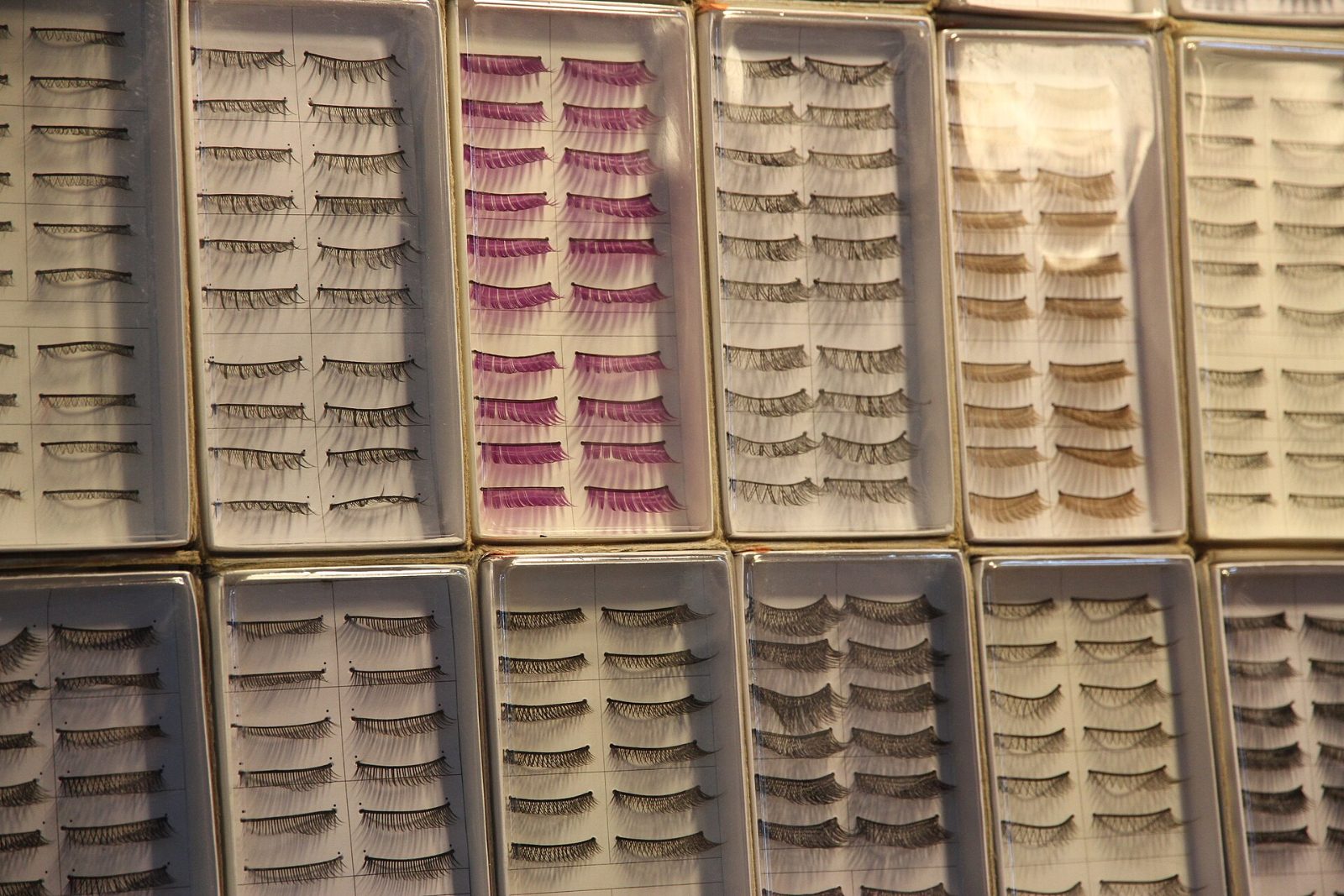
Lash extension adhesive is a fast-setting glue, almost always based on cyanoacrylate, that bonds each synthetic lash to a single natural lash. How long a set lasts, and how comfortable it feels, depends heavily on the adhesive type, the room’s humidity and temperature, and whether the client is sensitive to it.
What is in lash glue?
Professional lash adhesives are built on cyanoacrylate, the same chemical family used in fast-acting “super glues”, although lash formulas are adjusted for this use. Most contain a cyanoacrylate monomer (commonly ethyl cyanoacrylate, sometimes blended with others), a thickener to control how runny it is, stabilisers to stop it setting in the bottle, and usually carbon black pigment to make it look like eyeliner at the base.
Cyanoacrylate cures when it meets moisture. A tiny amount of water vapour in the air, or on the lash, starts a chain reaction that turns the liquid into a solid plastic. That is why humidity has such a big effect on how a glue behaves.
Types of lash adhesive
Manufacturers usually describe their glues by speed and by who they are meant for:
| Adhesive type | Typical drying speed | Usually suits | Things to know |
|---|---|---|---|
| Fast or “pro” | About 0.5 to 1 second | Experienced technicians, volume fans | Little time to correct placement |
| Medium | About 1 to 2 seconds | Most classic and hybrid work | A balance of control and retention |
| Slow or beginner | About 2 to 4 seconds | Students and new technicians | More time to position each lash |
| “Sensitive” formula | Often slower | Clients with mild irritation from fumes | Still cyanoacrylate, not allergy-proof |
| Clear | Varies | Light or coloured lashes | Base is less visible, may look less defined |
Speeds above are typical ranges printed by brands, and real-world drying depends on the room. A “1 second” glue can feel much slower in very dry air.
Why humidity and temperature matter so much
Most adhesive makers recommend working at roughly 40 to 60 percent humidity and around 20 to 24 degrees Celsius, though each brand prints its own ideal range. In the UAE this is a real issue. Outdoor air in summer can be very humid along the coast, while air-conditioned studios can become quite dry.
When the air is too dry, the glue cures slowly and can stay “wet” longer, which tends to release more fumes and weaken retention. When it is too humid, the glue can “shock cure” on the surface before the bond forms properly, and the lashes may drop early.
Practical steps studios use
- A hygrometer near the lash bed to read humidity and temperature
- A small humidifier or dehumidifier to stay in the brand’s range
- Fresh glue drops every 15 to 20 minutes, since a drop starts curing once exposed
- Fans or a nano mister only as the brand instructions describe
Retention: what really makes extensions last
Glue gets most of the credit, but retention depends on several things working together:
- Clean, dry natural lashes. Oil, makeup and protein residue block the bond. A proper lash cleanser and primer step makes a large difference.
- Correct amount of glue. Too much makes heavy, stuck-together lashes. Too little gives a weak bond.
- Good isolation. Each extension should be on one natural lash only, so lashes can shed on their own cycle.
- Room conditions within the adhesive’s range.
- Aftercare by the client, especially in the first 24 to 48 hours. Our lash aftercare checklist lists the main points.
Even with perfect technique, extensions shed as natural lashes fall out, which is why most people need refills every two to four weeks.
If a set falls out within days, the cause is more often preparation or room conditions than the brand of glue.
Sensitivity, irritation and allergy
Cyanoacrylate fumes can sting the eyes, and some people develop a true allergy (allergic contact dermatitis) to the adhesive or its components. Irritation and allergy are not the same thing.
- Irritation usually means watery, stinging eyes during or just after the appointment, often from fumes or from the eyes opening slightly. It tends to settle within hours.
- An allergic reaction often starts a day or more later, with swollen, itchy, red eyelids that may get worse with each appointment.
See a doctor promptly if you notice
- Swelling of the eyelids that keeps increasing
- Eye pain, blurred vision or sensitivity to light
- Discharge, crusting or a red eye that does not settle
In the UAE, an eye clinic or GP licensed by the DHA, DOH or MOHAP can assess you. Do not keep refilling extensions if you have reacted before.
Many technicians offer a patch test before a first full set, although a negative patch test does not guarantee you will never react. “Sensitive” glues may reduce fumes, but they are still cyanoacrylate and are not suitable for someone who is already allergic.

Who should avoid or postpone lash extensions
- People with a known allergy to cyanoacrylate or a previous reaction to lash glue
- Anyone with an active eye infection, blepharitis or recent eye surgery, until a doctor says it is fine
- People having chemotherapy or with lash loss conditions, unless their doctor agrees
- People who cannot lie still with eyes closed for an hour or more
Storing and handling lash glue
Adhesive should be kept sealed, upright and away from heat and sunlight, which matters in a hot climate if supplies are delivered or stored in cars. Many brands suggest replacing a bottle within a few weeks of opening because air exposure slowly changes it. Unopened bottles are sometimes kept in a cool place; follow the label, as some brands advise against refrigeration once opened.
Frequently asked questions
Is lash glue the same as nail glue or super glue?
They are related chemically, but household glues are not made or tested for use near the eyes. Never use them for lashes.
Can I buy professional lash adhesive for home use?
Professional glues are designed for trained technicians working with eyes closed and proper isolation. Using them at home increases the risk of glue touching the eye or skin.
Why do my eyes water after a lash appointment?
Mild watering from fumes is common and usually short-lived. Swelling or itching that starts later may suggest an allergy, so speak to a doctor before your next appointment.
Is there a lash glue without cyanoacrylate?
Some products are marketed as alternatives, but most professional extension adhesives rely on cyanoacrylate. Ask the brand for the full ingredient list if you have a known allergy.
Sources: U.S. Food and Drug Administration, cosmetics, American Academy of Ophthalmology, Dubai Health Authority
Cover photo: Maya-Anaïs Y., CC BY 2.0. Last reviewed: 2026-11-25. General information only, not medical advice. Please consult a licensed practitioner in the UAE about your own situation.
